

Telecommunication Towers
Telecommunication towers are tower-like structures specifically designed to install and support various types of communication antennas. They are the physical foundation of wireless communication networks, providing antennas with sufficient height, stability, and load-bearing capacity to optimize the coverage and quality of wireless signals.
-
![Guyed Wire Communication Tower]() Guyed Wire Communication TowerAdvantages: ① Guaranteed On-Time Delivery: Contractual obligation fulfillment; 15-day turnaround from finalized technical specifications; Precision scheduling adherence ② Certified Quality...read more
Guyed Wire Communication TowerAdvantages: ① Guaranteed On-Time Delivery: Contractual obligation fulfillment; 15-day turnaround from finalized technical specifications; Precision scheduling adherence ② Certified Quality...read more -
![Tubular Steel Tower]() Tubular Steel TowerTubular Steel Tower, as a structural tower widely used in the communication field, is an excellent steel structure product with excellent performance and strength. It can provide stable structural...read more
Tubular Steel TowerTubular Steel Tower, as a structural tower widely used in the communication field, is an excellent steel structure product with excellent performance and strength. It can provide stable structural...read more -
![Communication Angle Steel Tower]() Communication Angle Steel TowerCommunication angle steel tower refers to a tower structure composed of angle steel, which is mainly used in the construction of communication base stations.read more
Communication Angle Steel TowerCommunication angle steel tower refers to a tower structure composed of angle steel, which is mainly used in the construction of communication base stations.read more -
![Communication Towers]() Communication TowersAccording to different structural forms, communication towers can be divided into angle steel towers, steel pipe towers, single-tube towers, guyed towers, pole towers and landscape towers.read more
Communication TowersAccording to different structural forms, communication towers can be divided into angle steel towers, steel pipe towers, single-tube towers, guyed towers, pole towers and landscape towers.read more -
![15M Steel Pipe 4-legged Telecom Towers]()
-
![Tower Strengthening Parts]() Tower Strengthening PartsIn modern communication networks, the tower, as the core infrastructure supporting antennas and equipment, is paramount to structural integrity and safety. With the full arrival of the 5G era,...read more
Tower Strengthening PartsIn modern communication networks, the tower, as the core infrastructure supporting antennas and equipment, is paramount to structural integrity and safety. With the full arrival of the 5G era,...read more -
![RDU-Grillage Foundation]() RDU-Grillage FoundationThis foundation system is specifically engineered for communication towers. According to relevant patents, its core structure is a grid platform composed of multiple layers of high-strength...read more
RDU-Grillage FoundationThis foundation system is specifically engineered for communication towers. According to relevant patents, its core structure is a grid platform composed of multiple layers of high-strength...read more -
![30M Monopole Telecom Towers]()
-
![30M Monopole Communication Tower]() 30M Monopole Communication TowerMonopole communication tower is a steel structure facility widely used in the communication field, mainly used in 5G signal transmission, base station construction and other scenarios.read more
30M Monopole Communication TowerMonopole communication tower is a steel structure facility widely used in the communication field, mainly used in 5G signal transmission, base station construction and other scenarios.read more -
![20M Monoople Telecom Towers]()
-
![Three-tube Communication Tower]() Three-tube Communication TowerThe communication tower is composed of steel components such as the tower body, platform, lightning rod, ladder, antenna support, etc. The three-tube communication tower is a tall steel structure...read more
Three-tube Communication TowerThe communication tower is composed of steel components such as the tower body, platform, lightning rod, ladder, antenna support, etc. The three-tube communication tower is a tall steel structure...read more -
![Monopole Communication Tower]() Monopole Communication TowerTower type:monopole communication tower; connection:Plug-in or flange connection; Design:according to your requirements; Height:10-30M,can...read more
Monopole Communication TowerTower type:monopole communication tower; connection:Plug-in or flange connection; Design:according to your requirements; Height:10-30M,can...read more


The Significance of Telecommunication Towers
telecommunication towers are an essential component of our modern communication infrastructure
Improved Connectivity
Telecommunication towers provide better connectivity and higher quality communication services to residents in remote or rural areas. This helps bridge the digital divide and ensures that everyone has access to quality communication services.
Economic Advantages
Telecommunication towers bring significant economic benefits to communities and businesses by creating jobs, generating revenue, and promoting local economic development..
Emergency Services
Telecommunication towers play a crucial role in emergency services. During natural disasters or other emergencies, these towers help maintain communication lines and assist in rescue and relief efforts.
Innovation and Development
By making information accessible anytime, anywhere, they greatly improve the overall efficiency of society and drive the development of new technologies, products, and services.
Components of Telecommunication Towers
Tower body
The tower body is usually made of welded steel pipes or steel plates. Its function is to bear the weight of the antennas and equipment, ensuring the stability and durability of the tower..
Foundation
The foundation is the supporting structure of the tower, used to fix the tower to the ground and prevent it from collapsing. The type and depth of the foundation are determined by factors such as the height of the tower, the surrounding soil, and the terrain.

Antenna
The antenna is one of the most important parts of a communication tower. It is a device that converts wireless signals into electrical signals, and vice versa. Antennas come in various types and specifications, which can be selected according to different needs and applications.
Bracket
Brackets are components that connect the antenna to the tower. They are usually made of steel parts or steel pipes and have load-bearing and supporting functions.
Type of Telecommunication Towers
Lattice towers are freestanding and segmentally designed with rectangular or triangular base steel lattices. This type of tower construction can be useful in situations which require modifications such as mounting large number of panel or dish antennas. They can be used as electricity transmission towers, radio towers or as an observation tower. The Eiffel Tower is a famous example of a lattice tower.
Guyed towers can be lightweight to heavyweight towers often seen as slender steel structures. Commonly seen in the tower industry, guyed towers are designed to provide maximum strength, efficiency and versatility with easy installation. They are supported by one or more levels of braided or stranded steel guy cables that anchor to the ground.
Monopole towers work well when space is limited, zoning is difficult or harsh weather conditions need to be considered. Designed as a single-pole that can be a tubular section design or a formed, tapered pole, they are the least intrusive – making them the most popular tower types in the wireless communication industry. Because of the single-pole design, it advantageously reduces visual impact and results in a shorter construction time (and typically cost) compared to traditional lattice structures. Many monopoles can also be designed as stealth, camouflage towers.
Self-support towers offer the most possibilities compared to other types of telecom towers and are considered appropriate for nearly all wireless communication applications. Available in 3-legged triangular and 4-legged square lattice-type structures, their braces can accommodate the heaviest of loads and the strongest of winds. Their design is ideal for installations where space requirements may be limited and often inexpensive to purchase, transport and install.
Camouflage towers are typically used in urban areas when the need to reduce visual impact on the environment is a concern. They are often seen in the form of artificial pine trees, palm trees, clock towers and even in the form of artificial cacti.
Mobile cell towers (tower-on-wheels, cell-on-wheels) are considered low-profile and portable because they are often mounted on trailers. Coming with a portable, small footprint, mobile cell towers are discreet and very versatile. They are often used in temporary or emergency situations; however, they are also useful if budget or permits are of concern.
Why Choose Us
Factory Strength
As a manufacturer with over 10 years of industry experience, we have always adhered to the principle of "quality first" from design to production, and can offer you 100% quality assurance.
Advanced Equipment
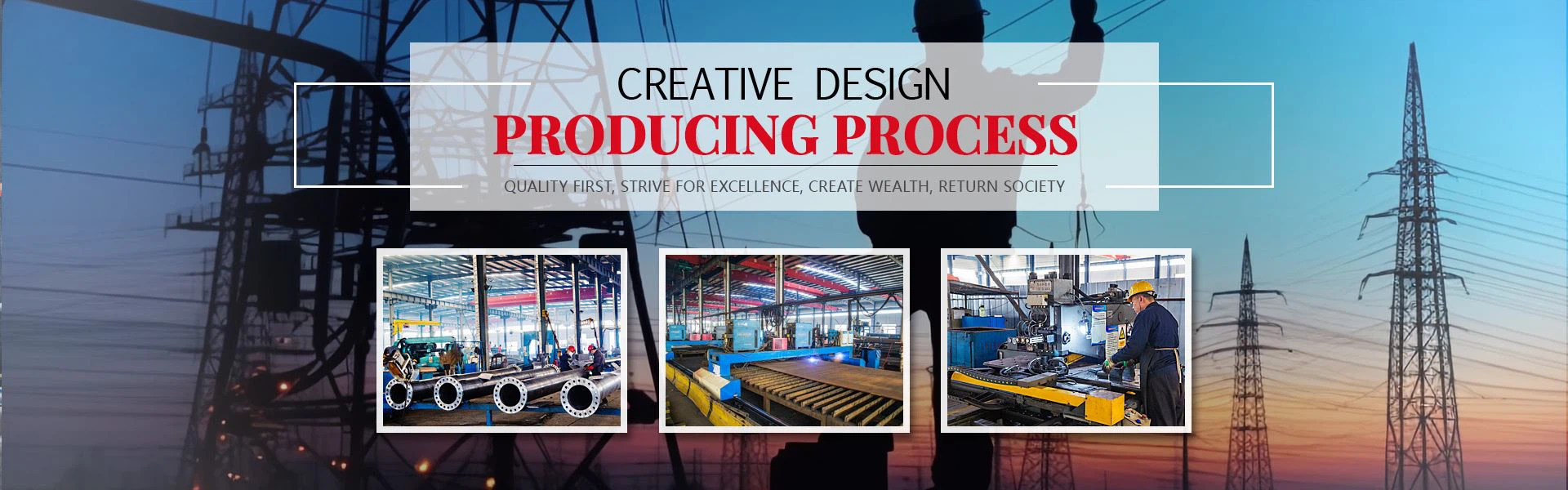
The factory has 230 employees, more than 200 advanced equipment, 47 welding support arms and can produce 70000tons.
High Quality
Our products are manufactured with high-quality raw materials and advanced technology to ensure that each product meets high quality standards. We have ISO9001:2015,ISO14001:2015,ISO45001:2018,CE 1090 certificate and CE3834 certificate.
Competitive Price
Our products have extremely competitive prices in the market, are cost-effective and perfectly meet customer needs.


The products manufactured by our factory have obtained certifications such as ISO9001, ISO14001 and CE, ensuring that all products are of high quality. Currently, our products have been widely applied in industries such as power, communication and photovoltaic power generation.

How to Maintain Telecommunication Towers
Telecommunication towers are indispensable communication facilities in modern society. Proper maintenance and upkeep are crucial to ensuring the normal operation of these communication facilities. To maintain telecommunication towers, we should take the following measures:
1. Regular inspection and maintenance: Inspect, clean, repair, and replace equipment such as towers, antennas, and cables to promptly detect potential damage and ensure the normal operation of the equipment.
2. Regularly clean pests from the tower, cables, antennas, and other components to prevent malfunctions caused by pests;
3. Install lightning protection equipment and protective steel bars to prevent lightning strikes; install anti-vibration support columns and anti-corrosion coatings to enhance the protection and durability of the equipment.
4. Regularly clear weeds and debris around the tower to ensure proper drainage, and check for any foreign objects attached to the tower body to prevent malfunctions.
FAQ
Q: 1. What is a telecommunication tower?
Q: 2. Why are telecommunication towers important?
Q: 3. Are telecommunication towers safe?
Q: 4. How tall are telecommunication towers?
Q: 5. How does a telecom tower work?
Q: 6. What are the components of a telecommunication tower?
Q: 7. What is the design of communication towers based on?
Q: 8. Does the construction of telecommunication towers have an impact on the environment?
Q: 9. How should telecommunication towers be maintained and managed?
Q: 10. Do telecommunication towers have any impact on the human body?
Q: 11. What is the installation process for a telrcommunication tower?
Q: 12. Why are telrcommunication towers usually built high up?
Q: 13. How far apart should telecommunication towers be?
We're well-known as one of the leading telecommunication towers manufacturers and suppliers in China. Please feel free to buy discount telecommunication towers made in China here and get quotation from our factory. Also, customized service is available.
Steel Lattice Tower, Angular Steel Tower