

Ⅰ. CORE FUNCTION: SIGNAL "RELAY STATION" AND "TRANSFER STATION"
The core role of communication towers is to address the issues of limited wireless signal coverage and transmission loss.
Wireless signals (such as mobile phone signals) travel via electromagnetic waves, but are limited by the Earth's curvature, obstacles (buildings, terrain), and inherent attenuation, resulting in a short propagation distance (typically 1-5 kilometers).
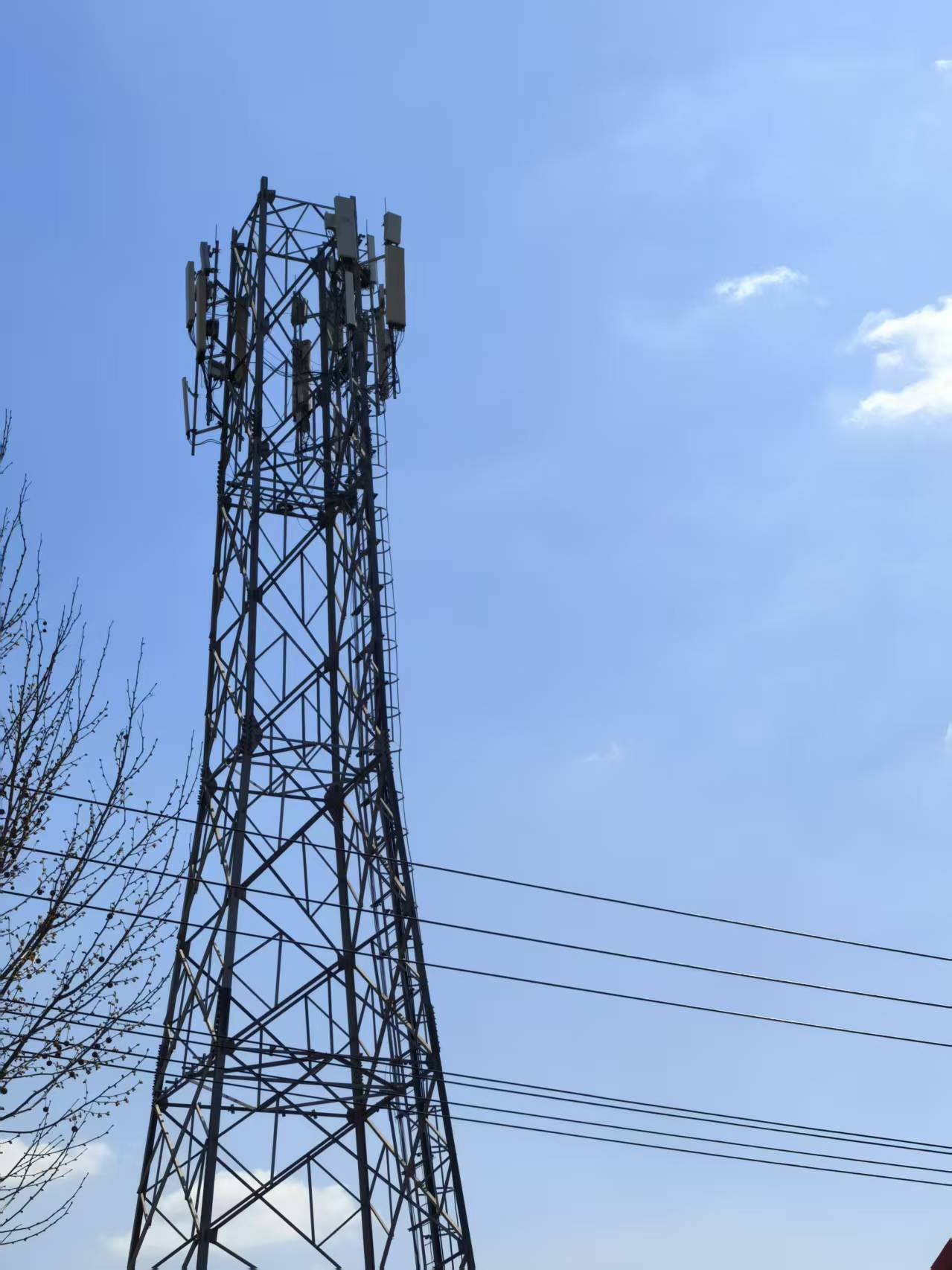
Communication towers elevate signal transmitting and receiving equipment (typically tens to hundreds of meters high) to reduce obstruction and expand signal coverage. High-power equipment is also used to enhance signal strength and offset transmission loss.
II. KEY COMPONENTS AND OPERATING PRINCIPLES
The communication tower itself is a supporting structure. It is the base station equipment and antenna system installed on the tower that truly realize the communication function. These core components include the following:
1. Antenna (Antenna System)
Transmitting Antenna: Converts the electrical signals output by the base station equipment into electromagnetic waves, broadcasting them to the coverage area (such as mobile phone signals and 5G millimeter waves).
Receiving Antenna: Captures electromagnetic waves sent by terminal devices (such as mobile phones), converts them into electrical signals, and transmits them to the base station for processing.
Antennas are typically directional (for example, directional antennas cover a specific area, while omnidirectional antennas cover 360°). Their coverage range is controlled by adjusting their angle and gain.
2. Base Station (Signal Processing Center)
Base station equipment (such as BBU and RRU), installed in the equipment room below or on the tower, is the core of signal processing:
Receive Signal Processing: Filters, amplifies, and demodulates the electrical signals transmitted by the antenna to extract the information sent by the terminal (such as voice and data).
Transmit Signal Processing: Encodes, modulates, and amplifies the information to be transmitted to the terminal (such as data from other mobile phones or the internet), converts it into electromagnetic waves, and transmits it through the antenna. Base stations also handle management functions such as access control (such as verifying mobile phone identities) and channel allocation (avoiding signal interference).
3. Transmission Link (Connecting to the Core Network)
Communication towers are connected to the communications core network via wired (fiber optic, cable) or wireless (microwave) links.
Communications between terminals (e.g., a call from phone A to phone B) require a path from terminal to base station to core network to another base station to another terminal. The transmission link of a communication tower serves as the "bridge" connecting the base station and the core network.
Ⅲ. COMPLETE SIGNAL TRANSMISSION PROCESS (USING A MOBILE PHONE CALL AS AN EXAMPLE)
Mobile Phone Transmission: When a user speaks, the phone converts the sound into an electrical signal, modulates it, and transmits it as electromagnetic waves through its antenna.
Communication Tower Reception: The tower's receiving antenna captures the electromagnetic waves, converts them into electrical signals, and transmits them to the base station.
Base Station Processing and Forwarding: The base station demodulates the signal, extracts the voice information, and sends it to the core network via a transmission link.
Core Network Routing: Based on the target number, the core network routes the signal to the base station in the area where the target phone is located. Target Base Station Transmits Signals: Communication towers in the target area modulate the signal into electromagnetic waves and broadcast it through a transmitting antenna.
Target Mobile Phone Receiving Signals: The target mobile phone receives the electromagnetic waves, converts them into sound, and completes the call.
IV. CharacterIV. CHARACTERISTICS OF DIFFERENT TYPES OF COMMUNICATION TOWERS
Macro Base Station Towers: High in height (30-100 meters), with a wide coverage range (1-5 kilometers), are used for large-scale coverage in urban and suburban areas.
Micro/Small Base Station Towers: Low in height (under 10 meters), with a narrow coverage range (several hundred meters), are used to fill blind spots in densely populated urban areas and indoor areas (such as shopping malls and basements).
Specialty Towers: These towers, such as rooftop poles (taking advantage of building height) and streetlight pole base stations (camouflaged to blend in with the environment), adapt to different terrains and aesthetic requirements.
Summary
Communication towers achieve long-distance transmission of wireless signals and communication between devices through the coordinated operation of "elevated antennas for extended coverage, base station signal processing, and link connection to the core network." They serve as the "nerve nodes" of the mobile communication network, and their number and layout directly impact signal coverage quality (such as signal strength, network speed, and call stability). With the development of 5G and the Internet of Things, communication towers are also upgrading to "multi-network integration" (simultaneously supporting 2G/3G/4G/5G) and "intelligence" (dynamically adjusting coverage and power).